Where humans dwell, debris of ruined buildings.
Fragments stories of houses used to be, and what made them soil again.
Burnt and burnt and burnt once more, another layer to erode.
With their ability to survive millennia in soil, and their tendency to break and be discarded on the ground, ceramics are among the most common archeological artifacts. Some served as decorative figures or cult items, others as storage vessels, construction materials or bearers of inscriptions.
A few tell their stories openly, some evoke associations, others are more recognizable as a bulk mass.
Among all them, one group sticks out with its sheer mass, superficial blandness and universality:
Bricks.
A rock made from mud, flat on all sides, a convenient size to handle, proportions stacking up in all directions.
Produced over millennia, in huge quantities.
In Berlin – an area that lacks rock outcrops and tectonic features – a mountain of scorched rubble with WW2 remains forms the highest elevation in the area.
All around the city bricks and their fragments have entered cycles of reuse in structures built after the war, or have been ground to dust by the footsteps of millions of pedestrians walking over them, enjoying the view while cursing the bad pavement.
Once a standardized product with indistinguishable exterior, the processes of erosion give them identity again.
Some have crusts of molten surfaces as a result of the fire bombings in WW2, many are broken into irregular pieces, different colors from different clay mixes have come together in one place.
Some have transitioned from a house for people to a habitat for lichen, mosses and other plants and animals.
At a time where a lot of the historic fragments of the city are disappearing from the accessible surface – either being overbuilt, or replaced with more “tidy” looking aggregates, I decided to engage more personally with them, challenging the notion of them being collectively worthless “rubble”.
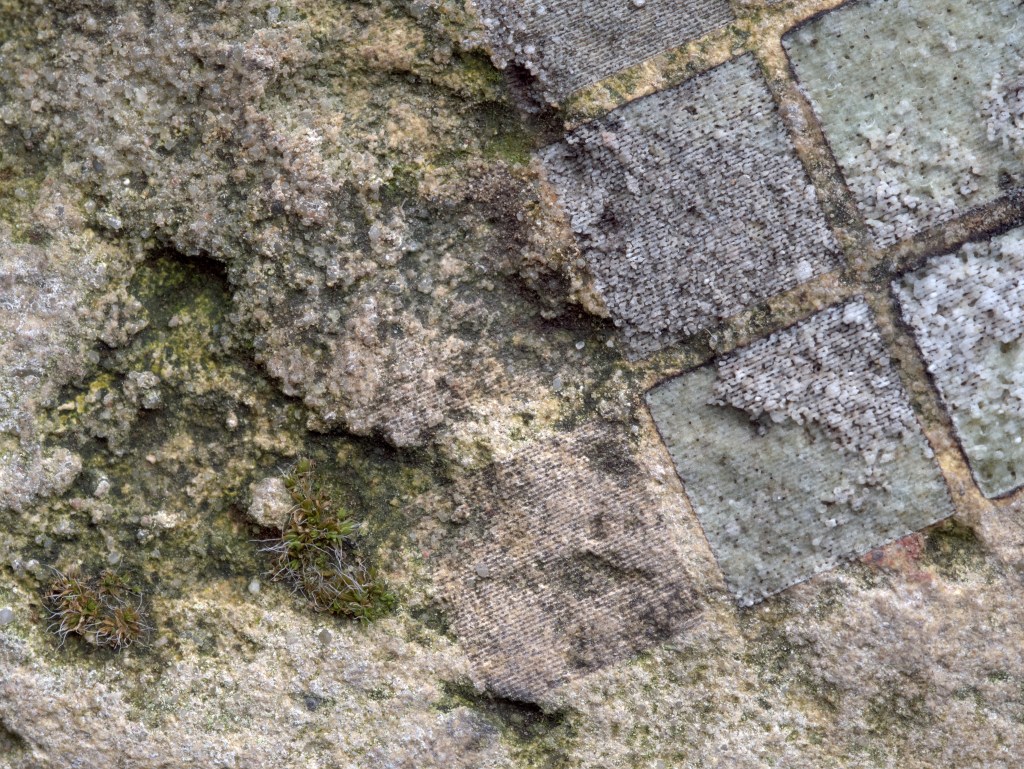
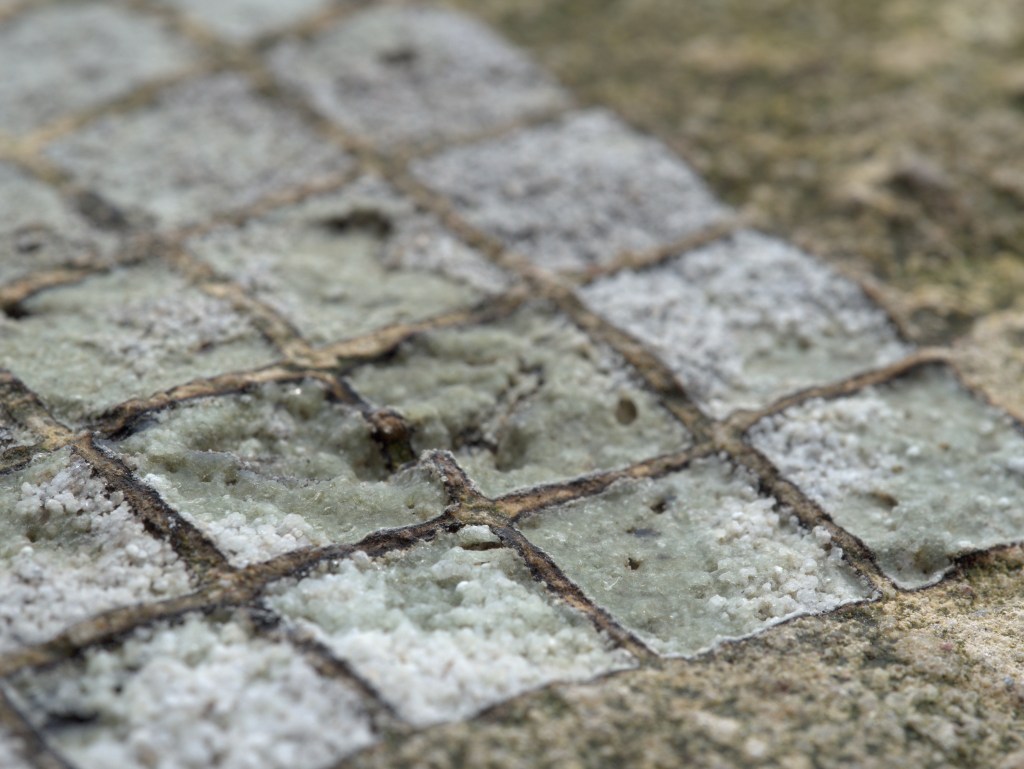
By treating the surface with the beam of a CO2-laser, a thin layer of the brick is heated up to the point of melting – burning it for a third time after its initial firing and the inferno of the bombardment that destroyed the building it was part of. The process transforms the clay into a glassy substance on the surface, not unlike a glazing in traditional pottery, but without adding or removing any material.
The pattern was chosen to resemble an abstract representation of a street layout in one of the newly constructed neighborhoods, creating a techno-petroglyph that will be identified as clearly intentional, but enigmatic by a future finder. The brick was made in a preindustrial process, resulting in a slightly irregular shape, used to construct a small datcha in the 1950ies, part of which was torn down in the 2020ies, and settled by moss and algae in the allotment it came to lie in until 2025.


 Felix Bonowski